

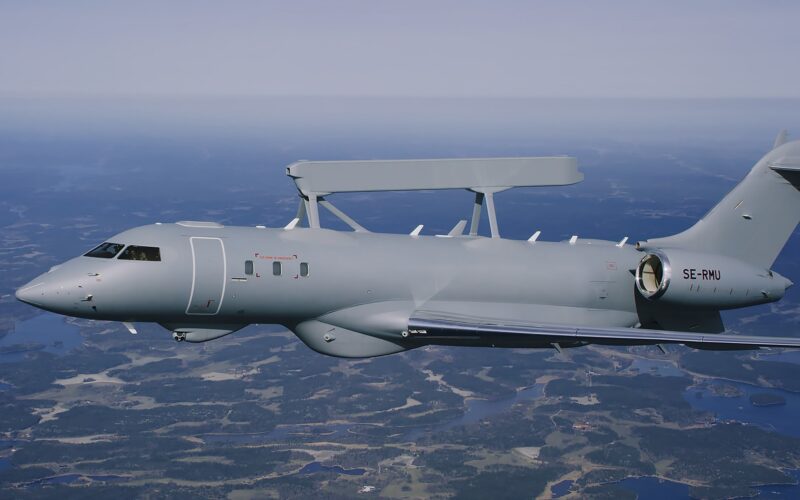
NATO is expected to announce plans to replace its aging Boeing E-3A Sentry AWACS fleet with Saab GlobalEye surveillance aircraft, Reuters reported on July 2, 2026, citing four sources familiar with the matter.
According to the report, the announcement is expected during the 2026 Ankara NATO Summit in Turkey on July 7 and 8, 2026.
AeroTime has contacted Saab for comment but has not received a response at the time of publication.
Ankara announcement expected
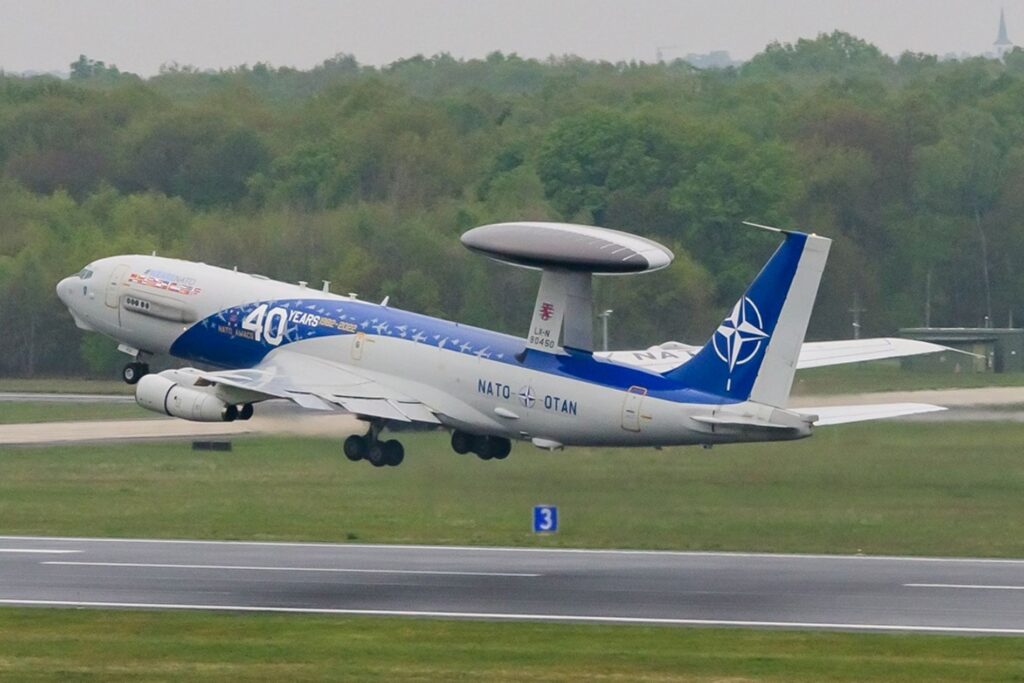
If confirmed, the decision would mark a major shift in NATO’s airborne early warning and control architecture, moving the alliance’s common surveillance fleet away from the Boeing 707-derived E-3A Sentry after more than four decades of operations.
NATO currently operates 14 E-3A AWACS aircraft from NATO Air Base Geilenkirchen in Germany. The fleet has been in service since 1982 and is expected to retire around 2035. Since Russia’s full-scale invasion of Ukraine in 2022, the aircraft have been heavily used for surveillance missions along NATO’s eastern flank.
Under the reported replacement plan, Geilenkirchen could eventually become the center of NATO’s GlobalEye fleet. The number of aircraft to be acquired has not yet been officially confirmed.
Boeing E-7 plan dropped
The reported selection would also represent another setback for Boeing’s E-7A Wedgetail in NATO’s common-funded surveillance plans. In November 2023, NATO selected the E-7A as the initial aircraft element of its future airborne surveillance capability, with six aircraft expected and the first planned to become operational in 2031.
That plan began to unravel after the US Air Force moved to cancel its own E-7A procurement in favor of space-based surveillance systems. NATO allies later abandoned the six-aircraft Wedgetail acquisition, arguing that the original program had lost both its strategic and financial basis.
GlobalEye replaces the rotodome
GlobalEye is Saab’s airborne early warning and control platform, combining the Erieye Extended Range active electronically scanned array radar with Bombardier’s Global business jet family. Saab says the system can provide air, maritime, and ground surveillance from a single aircraft, with a radar range of more than 550 kilometers.
Unlike the E-3A’s rotating rotodome, GlobalEye uses a fixed “plank” radar mounted above the fuselage. The system is designed to detect and track targets across multiple domains while acting as an airborne command-and-control node for networked operations.
The choice of GlobalEye would also fit NATO’s broader shift from a one-for-one AWACS replacement to a wider “system of systems” under the Alliance Federated Surveillance and Control program.
Saab order book grows
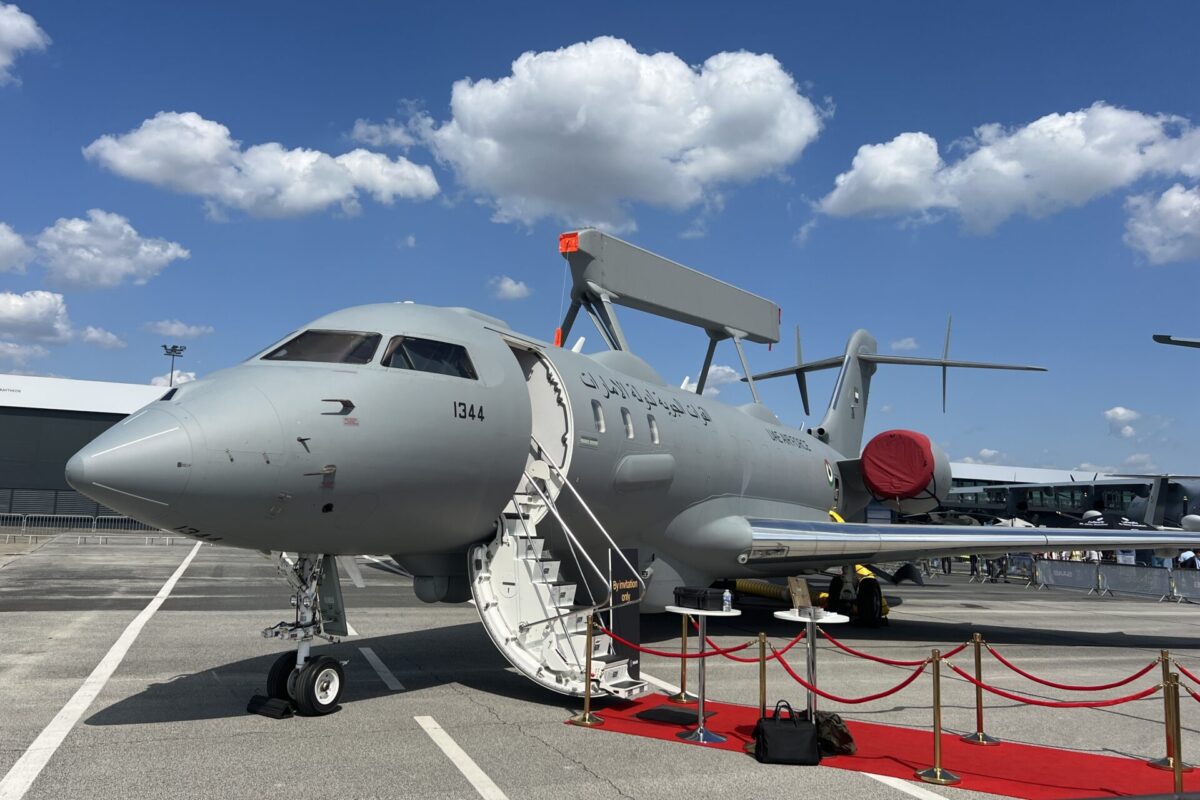
For Saab, a NATO GlobalEye decision would strengthen a growing order book. Sweden has ordered three GlobalEye aircraft, the United Arab Emirates already operates the type, and France ordered two aircraft in December 2025, with options for two more.
In April 2026, the French defense publication La Lettre reported that NATO’s Support and Procurement Agency had awarded the AWACS replacement contract to Saab and Bombardier. At the time, Saab told AeroTime that it had provided information to NATO but had not signed a contract or received an order from NATO for GlobalEye.