

Taiwan’s military and coast guard have launched a large-scale search and rescue operation after a Republic of China Air Force (ROCAF) F-16V Block 20 fighter jet crashed into the sea off Hualien County during a routine nighttime training mission, with the pilot still unaccounted for as of the latest official updates.
Taiwan’s Ministry of National Defense said the single-seat F-16, serial number 6700, assigned to the 5th Tactical Fighter Wing, took off from Hualien Air Base at 18:17 local time on January 6, 2026. At 19:29, the aircraft experienced an in-flight anomaly around 10 nautical miles (18 kilometers) east of Fengbin Township, Hualien County, and the Air Force assessed that the pilot, Captain Hsin Po-yi, may have ejected.
The ROCAF established a response center and launched immediate search efforts. Upon receiving the report, Defense Minister Wellington Koo went to the Air Force Command to assess the situation and ordered the full deployment of available naval, air force, and army aircraft, ships, and personnel, along with support from national search-and-rescue organizations and Taiwan’s Coast Guard Administration (CGA).
Search expands in poor sea conditions
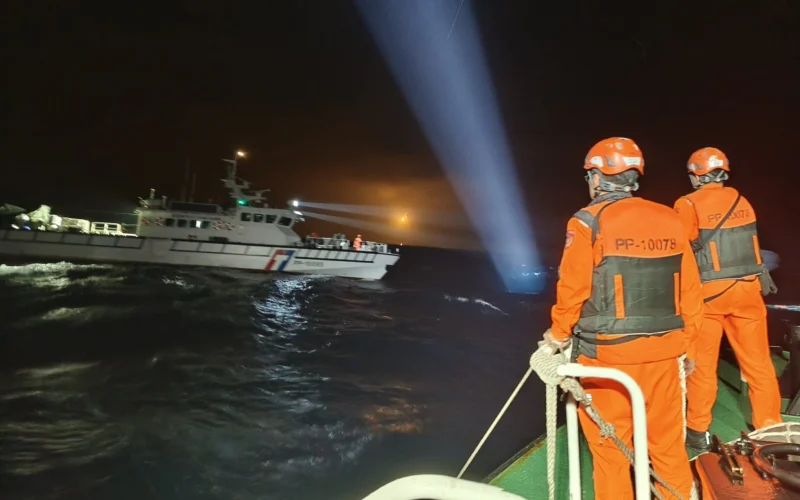
The CGA said it set up an emergency response center under the direction of its director-general and dispatched three ships and six patrol craft to the accident area to support the maritime search and rescue effort.
According to the CGA, two patrol boats (PP-10095 and PP-10078) deployed surface current buoys (SLDMBs) upon arrival and used the service’s Search and Rescue Optimization Planning System to estimate drift and current direction, helping to position vessels across assigned search sectors.
The CGA said conditions offshore were “extremely rough” due to a continental cold air mass, with winds at force 6 to 7, gusting to force 9, and waves reaching up to three meters, adding complexity to nighttime operations as temperatures dropped after dark. It said its crews were coordinating closely with aerial support while attempting to widen the search area.
UPDATE: Taiwan's Coast Guard has dispatched a total of 3 vessels and 6 boats near the accident area and has deployed a total of 4 SLDMB (Sea Disaster Detection and Rescue) tracking buoys.
— Jaime Ocon 歐海美 (@JaimeOcon1) January 7, 2026
The Coast Guard will continue to cooperate with the @MoNDefense in search and rescue… https://t.co/7ltO7AaVvP pic.twitter.com/LJMmpiTr0H
To expand coverage, the CGA said it contacted the Marshall Islands-registered cargo ship Harmony Ocean, which was approximately 10 nautical miles (18 kilometers) from the scene, to serve as an additional lookout. It also requested that Taiwan’s Fisheries Agency call on nearby fishing vessels to support the search.
Taiwan’s air force said a total of 13 aircraft and 11 ships are participating in the ongoing operation.
Ejection not yet confirmed
While initial official reporting indicated the pilot was suspected to have ejected, the military has not confirmed a successful ejection, citing the lack of a locator signal from an ejection seat beacon.
According to ROCAF, the F-16’s flight computer recorded an alarm sounding “EJECT, EJECT, EJECT.” However, officials said they have not received any transmission or signal from an ejection seat locator, and they are working from an estimated crash location while continuing to search for the pilot.
Taiwan’s air force said the aircraft was at an altitude of 1,700 feet when it experienced the issue. Reported flight conditions in the area included around 5 nautical miles (9 kilometers) visibility with light rain.
Fleet grounded as inspections begin
ROCAF said it has grounded all F-16 aircraft to conduct a thorough inspection following the crash. Officials also stated that aircraft 6700 had received routine maintenance checks and had not experienced major problems since delivery.
The Ministry of National Defense said Captain Hsin graduated from the Air Force Academy in 2019 and is currently a fighter pilot. The ministry reported that he has 611 total flight hours, including 371 hours on the F-16.
The ministry also released technical usage figures for the aircraft, stating the airframe clock was 3,894 hours and total engine usage time was 5,447 hours.
An investigation into the cause of the crash is expected to proceed alongside ongoing search and rescue efforts.
F-16 modernization effort

The F-16 is the backbone of Taiwan’s fighter force. Taipei ordered 150 F-16A/B Block 20 fighters in the early 1990s under the Peace Phoenix program, and the fleet has since undergone successive modernization efforts.
Under the first phase of the Peace Phoenix Rising program initiated in 2016 and completed in 2024, Taiwan has upgraded its legacy F-16A/B aircraft to the F-16V configuration, introducing new mission systems including the AN/APG-83 AESA radar, upgraded avionics, and electronic warfare improvements. In November 2021, Taiwan became the first nation to reach full operational capability with the new standard.
The aircraft involved in the incident was one of the older F-16A airframes that had been brought up to the F-16V standard.
Taiwan is also awaiting delivery of 66 new-build F-16V Block 70 fighters approved by the US in 2019, a program that has faced schedule pressure as Lockheed Martin works through wider production and supply-chain constraints.