
G700
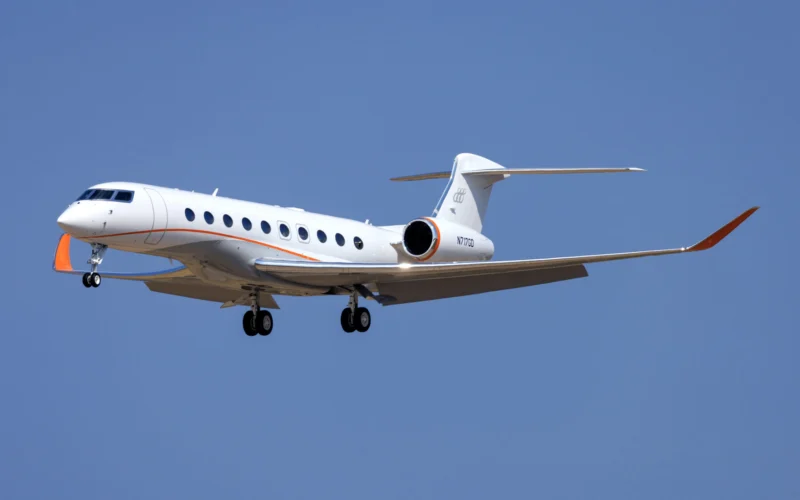
G700 at a glance
The Gulfstream G700 flies 7,750 nautical miles nonstop, enough to link New York and Tokyo, and offers the largest cabin Gulfstream has ever built: up to five living areas, meaning separate zones for working, dining, sleeping and crew rest on the longest missions. Deliveries began in 2024 after FAA certification that March.
The G700 is Gulfstream's volume flagship, built to defend the top of the ultra-long-range segment against the Bombardier Global 7500, which beat it to market by six years. Its Rolls-Royce Pearl 700 engines and a cabin altitude below 3,000 feet at cruise, the lowest in the class, are the aircraft's two headline selling points, and early production has been absorbed largely by fleet operators and heads of state.
Full specifications
Market position
The G700's direct rival is the Bombardier Global 7500, the aircraft that created the five-zone cabin category, and the two now split most orders at the very top of the market while the Dassault Falcon 10X waits in the wings for 2027. Gulfstream's pitch is cabin environment, 100% fresh air and the lowest cabin altitude in the segment; Bombardier answers with field performance and a proven service record, a contest that has pushed both companies to record large-cabin backlogs.
Gulfstream Aerospace, the Savannah, Georgia-based business jet unit of General Dynamics, has been building large-cabin jets since the Gulfstream II of 1966 and delivers from final assembly lines in Savannah and Appleton, Wisconsin.
Frequently asked questions
7,750 nautical miles at Mach 0.85, enough to fly New York to Tokyo without a fuel stop.
Up to 19 passengers in a cabin that can be configured with as many as five separate living areas.
The Bombardier Global 7500 and 8000 family is its closest rival, with Dassault's Falcon 10X set to join the contest in 2027.