

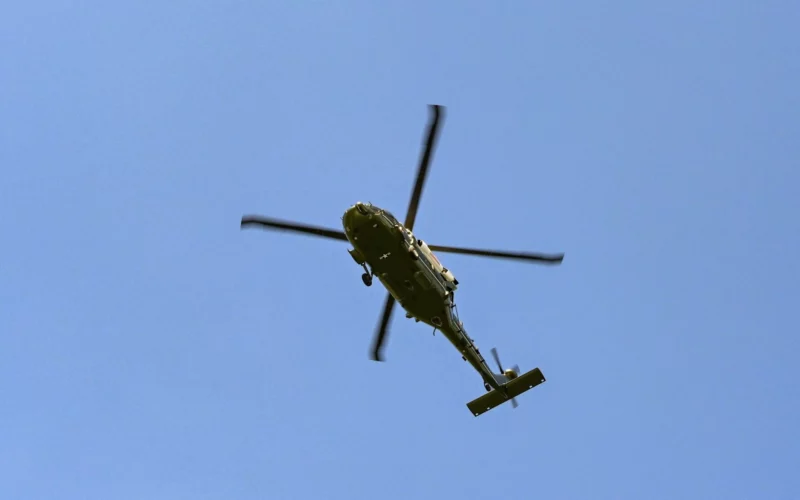
Following the 2025 midair collision between a regional jet and a US Army Black Hawk helicopter near Ronald Reagan Washington National Airport (DCA), the FAA is introducing a notable new safety measure. The agency will now suspend the use of visual separation between airplanes and helicopters in busy terminal airspace and require controllers to use radar separation instead.
The move, announced March 18, 2026, by Transportation Secretary Sean Duffy and Federal Aviation Administration (FAA) head Bryan Bedford, applies in Class B and Class C airspace and in Terminal Radar Service Areas where helicopters cross arrival or departure corridors near airports.
The FAA said the new general notice follows a year-long review launched after the January 29, 2025 crash near DCA, in which an Army Black Hawk collided with American Airlines Flight 5342, killing 67 people. Since that accident, the FAA has steadily tightened helicopter operations around Washington, DC, and reviewed other airports with heavy volumes of mixed helicopter and fixed-wing traffic.
The FAA action marks a significant change because it takes a safety fix first applied around DCA and extends the concept across a much broader swath of the US National Airspace System.
FAA officials said their review found an overreliance on pilot “see and avoid” practices in high-traffic areas where helicopters routinely cross final approach or departure paths. Under visual separation, controllers can point out nearby traffic and allow pilots to remain clear visually rather than maintaining standard radar-based spacing. The FAA says that safeguard is not sufficient in these environments, and that controllers must now instead actively manage aircraft separation by radar at specific lateral or vertical distances.
The agency pointed to two recent incidents that underscored the safety concern. On February 27, 2026, American Airlines Flight 1657 was cleared to land at San Antonio’s airport when a police helicopter transited the final approach path, forcing the helicopter to turn away. On March 2, a Beechcraft 99 on approach to Hollywood Burbank Airport in California conflicted with a helicopter crossing the approach path, prompting evasive action. Neither event ended in disaster, but together they helped reinforce the FAA’s conclusion that the risk extends well beyond the Washington area.
The announcement also fits squarely into the broader post-DCA safety push that has spilled into Congress. The Senate-passed ROTOR Act would require broader use of ADS-B technology and implement key reforms tied to the National Transportation Safety Board’s (NTSB) probable cause findings, while House lawmakers advanced the wider ALERT Act to address all 50 NTSB safety recommendations stemming from the DCA investigation.
The FAA’s latest procedural change is separate from those bills, but it clearly moves in the same direction by requiring less reliance on informal see-and-avoid practices and more structured separation, surveillance, and oversight when mixing helicopter and airline traffic near major airports.
Congress is still debating legislation related to the DCA crash. The Senate passed the ROTOR Act unanimously in December 2025, but the measure narrowly failed in the House on February 24, 2026, after the Pentagon dropped its support for the measure and it did not clear the two-thirds threshold needed to advance.
House lawmakers are now continuing work on the broader ALERT Act, introduced in February 2026, as a more comprehensive package aimed at addressing the NTSB’s post-crash safety recommendations.
1 comment
I was just briefed by ATC on this procedure and I was appalled that the FAA is going away from “See and Avoid” to separation by radar. What in the world is the FAA thinking! First of all this is a Knee jurk reaction with no thought as to the ramifications of implementing this procedure. This can literally shut down an airport due to helicopter operations near an airport. Further it places a higher workload on ATC especially in high volume airspace.
Think about what caused this DC accident and what helicopter were doing in the other two events, helicopter were operating in approach airspace of airports! My question is WHY! An airplane would not be allowed to operate in such areas for reasons other than for landing. Had FAA prohibited such operations in the DC area this whole event would not have occurred. Further, the military should not have been allowed the operate in busy airspace at night using NVG which hinder peripheral vision and are difficult to use over congested airspace with high illumination. Operations of this type takes special training which seems to have been questionable in the DC accident.
So the FAA instead of carefully evaluating the causes and speaking to all parties, a “knee jurk” reaction has taken place. Now the FAA will argue they did speak to all parties, but that was high level personnel who do not have the insight necessary to achieve a safe solution. I am retired and I will not say exactly what I did in aviation but it was at a high level so I have seen these poor decisions. I alway stressed, talk to those in the trenches and they will tell you how best to solve a problem, because they deal with it every day. Don’t look at the surface, look under the covers, look at the long term safety of aviation and airspace operations. Let’s not trash “See and avoid”, let’s all work together and stope unsafe operations such as the helicopter operations in the DC airspace.